If you own a home in Orlando, you know that our roofs don’t just sit there—they bake. With an average of 233 sunny days a year and summer temperatures regularly hitting 92°F (with a heat index that feels like a literal oven), your roof is the first line of defense against a brutal climate.
But here’s the industry secret most homeowners miss: the most important part of your roof isn’t the shingles you see—it’s the underlayment you don’t.
At Top Builder Roofer, we’ve spent decades stripping back old roofs in Central Florida. We’ve seen what happens when the wrong materials meet the Florida sun. Today, we’re breaking down the two heavyweights of the modern roofing world: Peel and Stick (Self-Adhered) and Synthetic Underlayment.
Why the Underlayment Matters More in Orlando
In the “old days,” we used 30lb organic felt (tar paper). In Florida, that’s a recipe for disaster. Felt absorbs moisture, wrinkles, and becomes brittle under extreme heat.
According to the Florida Building Code (FBC) 7th Edition, secondary water barriers have become a focal point for hurricane mitigation. If your shingles blow off during a tropical storm, the underlayment is all that stands between your living room and a torrential downpour.
1. Synthetic Underlayment: The Modern Standard
Synthetic underlayment is typically woven from polypropylene or polyethylene. It’s lightweight, incredibly strong, and miles ahead of old-school felt.
The Benefits for Florida Homeowners:
- Heat Resistance: Unlike felt, synthetics don’t “cook” and become brittle. Most high-quality synthetics are UV-rated, meaning they can stay exposed to the sun for 90 to 180 days during construction without degrading.
- Woven Strength: You can’t easily tear synthetic underlayment. This is vital during Florida’s afternoon thunderstorms during the “dried-in” phase of roofing.
- Breathability vs. Barriers: Some synthetics are designed to be “breathable,” allowing moisture from inside your attic to escape, which helps prevent wood rot in our humid climate.
The Downside:
It is mechanically fastened (nailed down). While the nails have plastic caps, every nail is technically a hole. In a high-velocity hurricane zone (HVHZ) like Florida, if the shingles go, water can eventually seep through those nail penetrations.
2. Peel and Stick (Self-Adhered): The Gold Standard
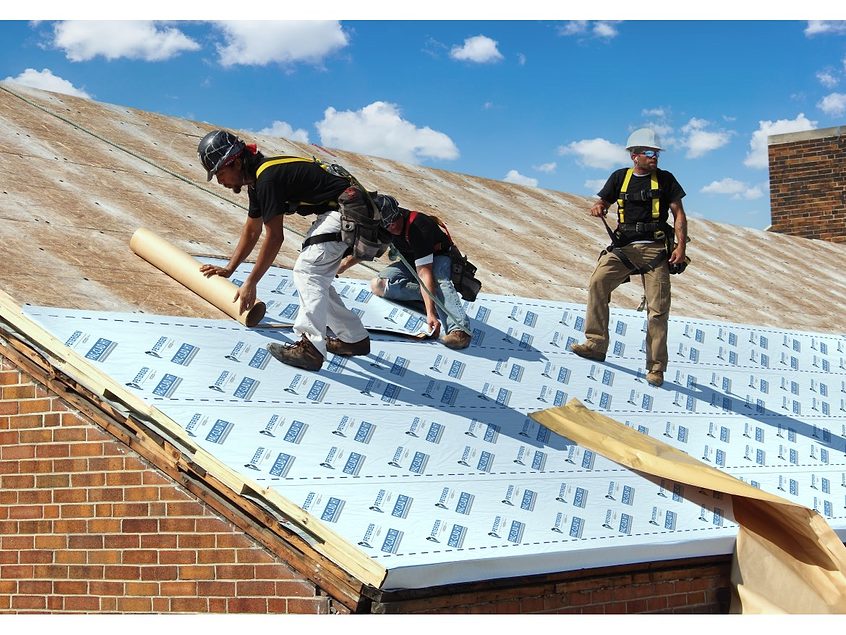
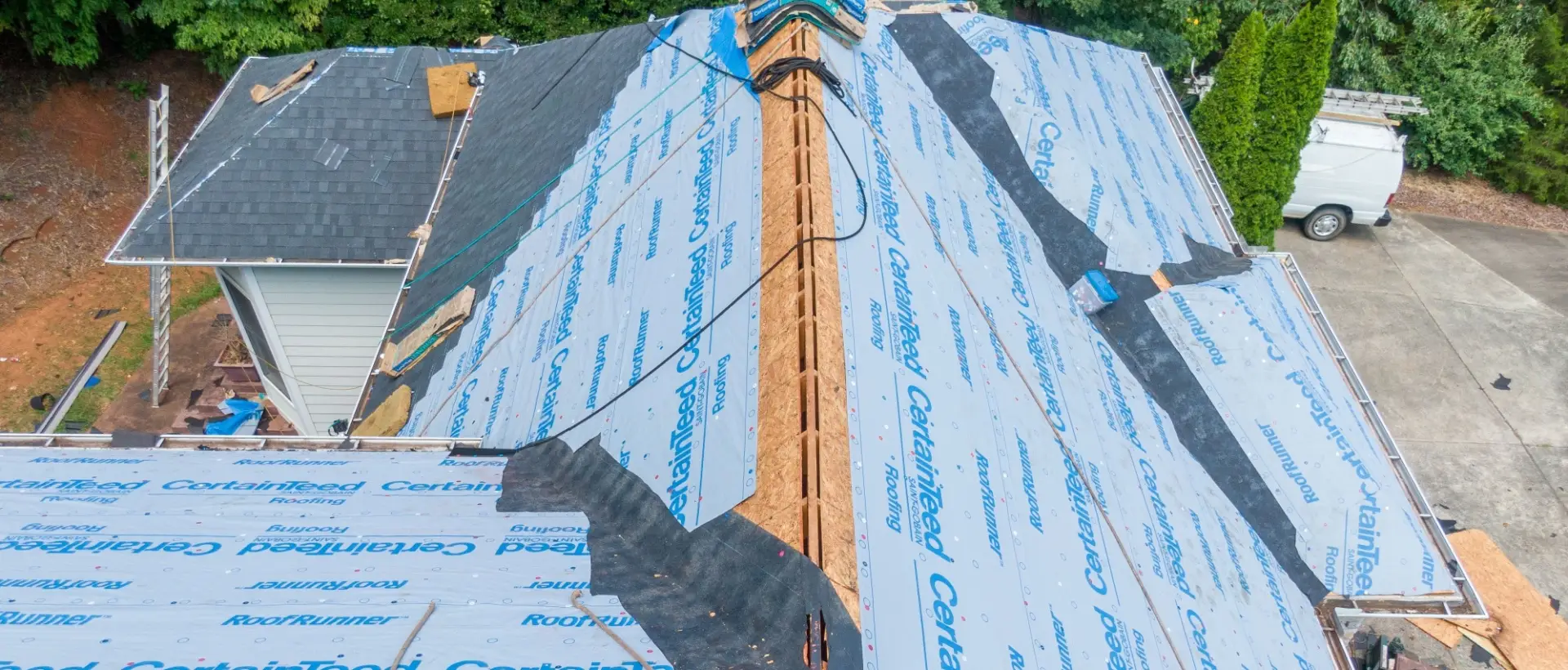
If synthetic is the “silver” tier, Peel and Stick is the “platinum.” This is a thick, rubberized asphalt membrane with a sticky adhesive backing that bonds directly to your roof deck (the plywood).
Why It Wins in the Florida Heat:
- The “Self-Healing” Property: This is the game-changer. When you nail a shingle through a peel-and-stick membrane, the rubberized bitumen “clutches” the nail. It creates a gasket-like seal.
- Secondary Water Barrier (SWB): This is the ultimate peace of mind. If a hurricane rips your shingles off, a peel-and-stick underlayment stays fused to the wood. Your house remains watertight even without shingles.
- Thermal Stability: Quality products like Grace Ice & Water Shield or Owens Corning DeckDefense are engineered to handle the high-temperature cycles of an Orlando roof, where deck temperatures can exceed 160°F.
Real-World Data: Insurance Savings
In Florida, installing a self-adhered underlayment often qualifies you for a Secondary Water Barrier (SWB) discount on your windstorm insurance. According to various Florida insurance providers, this can reduce your premiums by 10% to 25%, meaning the upgrade often pays for itself within 3–5 years.
Comparing the Two: A Side-by-Side Look
| Feature | Synthetic Underlayment | Peel and Stick (Self-Adhered) |
| Installation | Nailed down (Plastic Caps) | Chemically bonded to deck |
| Waterproof Level | Highly water-resistant | 100% Waterproof |
| Hurricane Protection | Good | Best (Secondary Water Barrier) |
| Cost | Budget-friendly | Premium investment |
| Lifespan | 25–40 years | 40–50+ years |
The “Florida Heat” Factor: A Warning
Not all peel-and-stick products are created equal. In the Orlando heat, cheap adhesive can “run” or bleed if it isn’t rated for high temperatures.
At Top Builder Roofer, we only use high-temp rated membranes. Why? Because a standard peel-and-stick might be rated for 180°F, but under a dark architectural shingle in July, your roof deck can get dangerously close to that. We ensure the materials we use have a “high-softening point” to prevent the adhesive from shifting.
Real Scenario: The 2024 Hurricane Season
During recent storms, we inspected two homes side-by-side in a neighborhood that took a direct hit.
- Home A had synthetic underlayment. It lost 30% of its shingles. While the house stayed mostly dry, there was minor spotting on the ceiling where water backed up under the laps of the synthetic.
- Home B had a full Peel and Stick barrier. It lost nearly 50% of its shingles (older 3-tab style). However, the interior was completely bone dry. The underlayment acted as a temporary “rubber roof” until we could get there for repairs.
Does Your Roof Need a “Hybrid” System?
Sometimes, we recommend a hybrid approach to balance cost and protection. This involves:
- Peel and Stick in the “critical zones” (valleys, chimneys, and low-slope areas).
- Synthetic Underlayment on the main slopes.
However, for maximum longevity and the best insurance credits, a full peel-and-stick application is the undisputed king of Florida roofing.
The Verdict: Which should you choose?
If you are planning to live in your Orlando home for more than 5 years, Peel and Stick is the superior choice. The combination of the Florida Building Code requirements and the sheer intensity of our sun makes the added “gasket seal” of a self-adhered membrane invaluable. It protects the wood deck from rotting due to humidity and provides a fail-safe against the inevitable summer storms.
Key Takeaways for Orlando Homeowners:
- Check the Rating: Ensure your contractor is using a high-temp underlayment.
- Insurance: Ask your agent about “Secondary Water Barrier” credits before you sign a contract.
- Deck Condition: Peel and stick requires a clean, dry deck to bond properly. If your current roof has rot, that wood must be replaced first.
Trust the Orlando Roofing Experts
Choosing a roof is a big decision, but you don’t have to make it alone. At Top Builder Roofer, we have over two decades of experience navigating the specific challenges of Central Florida’s climate. We don’t just “slap on shingles”—we build a tiered defense system designed to keep your family safe and your attic cool.
Don’t wait until the next tropical system is brewing in the Atlantic to find out if your underlayment is up to the task. Whether you’re interested in the rugged durability of synthetic or the bulletproof protection of peel-and-stick, we’re here to help you make the right call.
Call Top Builder Roofer today for a free roof inspection and let’s discuss the underlayment options available to start your project immediately!